
Read in Polish. Vol. 19: Stefan Grabiński "Professor Czelawa’s Problem"
Details about the available publication format: LOOK INSIDE
Details about the available publication format: BUY THE BOOK
Synopsis
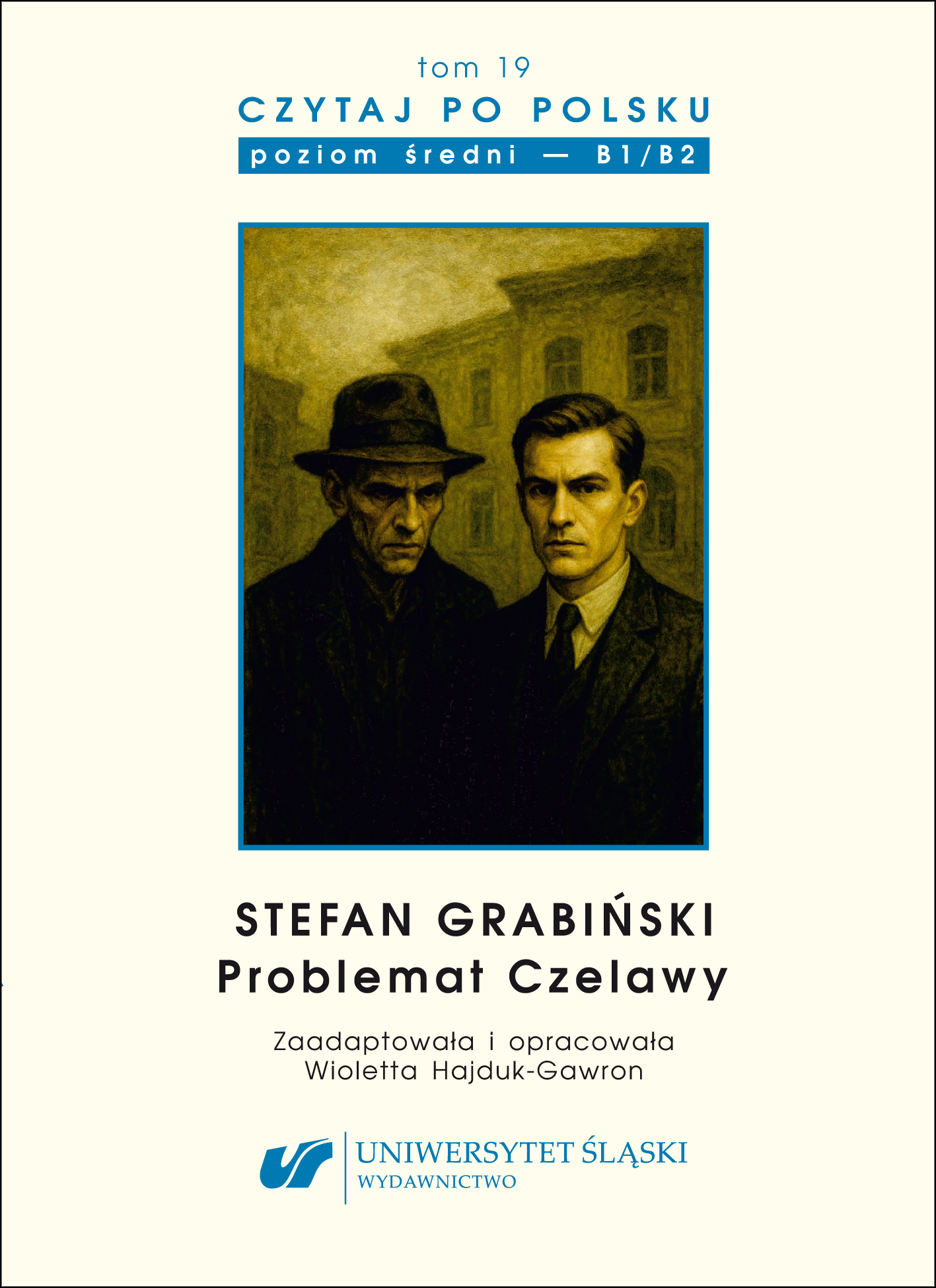
Professor Czelawa’s Problem (Problemat Czelawy) by S. Grabiński – a horror fantasy novella from 1920, published in the collection of novellas titled Szalony pątnik (The Mad Pilgrim). It is a story about conjoined twins who, after being surgically separated, lived interchangeably – one at night, the other during the day – because they shared a single soul. The soul’s nature depended on physical conditions: in one body, it manifested as an intelligent psychologist – Professor Czelawa – and in the other, as a brutal thug named Stachur. In the evening, the psychologist would fall into a cataleptic sleep, and then Stachur would emerge from his study. In his lectures, the scientist used Stachur’s nighttime experiences to illustrate certain theories about degenerate human behaviour. The whole story is recounted by the professor’s former student, who runs a private psychology practice. One of his patients is Wanda, Czelawa’s wife, who suspects herself of hallucinating. The young doctor starts an investigation and helps solve Wanda’s problem. The plot concept of Problemat Czelawy (Professor Czelawa’s Problem) corresponds to the theme of an iconic piece of English literature – The Strange Case of Dr Jekyll and Mr Hyde (Doktor Jekyll i pan Hyde) by Robert Stevenson (1886); however, Grabiński is unlikely to have been familiar with it. In 1985, Grabiński’s novella was adapted into a film entitled Problemat profesora Czelawy (Professor Czelawa’s Problem) (directed by Zygmunt Lech). This publication is part of the “Read in Polish” series; the text of the novella has been adapted to the B1/B2 language level and includes exercises designed to improve language and cultural competence.


